


KETUBAH: Is this a Valid practice or Law in the Community of Yisrael for Marriages!!?

Updated: Sep 29

ketubah (kɛtuːˈbɑː; Hebrew: כְּתוּבָּה) is a Jewish marriage contract. It is considered an integral part of a traditional Jewish marriage, and outlines the rights and responsibilities of the groom, in relation to the bride. In modern practice, the ketubah has no agreed monetary value, and is seldom enforced by civil courts, except in Israel.
The Ketubah is neither historical nor Biblical, it’s origin comes from the Babylonian Talmud, the ketubah was enacted by a Jew named Simeon ben Shetach so that it might not be a light thing for a man to divorce his wife. The enactment provides for a man's wife to receive a fixed sum of money, usually accruing from his property, in the event of his divorcing her or of his predeceasing her. Sefer ha-Chinuch, another Jewish book, suggests a different reason: "...the Torah has commanded us to perform an act before taking a wife, a matter that is intended to show that they are a couple united in wedlock before he lies down with her carnally, and that he not come upon her as one would do to a harlot, where there is no other act that precedes what goes on between them..."
The Jewish Rabbis in older times insisted on the marriage couple entering into the ketubah as a protection for the wife. It acted as a replacement of the biblical mohar (Dowry), the price paid by the groom to the bride, or her parents, for the marriage (i.e., the bride price). The ketubah served as a contract, whereby the amount due to the wife (the bride-price) came to be paid in the event of the cessation of marriage, either by the death of the husband or divorce. The biblical mohar created a major social problem: many young prospective husbands could not raise the mohar at the time when they would normally be expected to marry. So, to enable these young men to marry, the rabbis, in effect, delayed the time that the amount would be payable, when they would be more likely to have the sum. The mechanism adopted was to provide for the mohar to be a part of the ketubah. Both the mohar and the ketubah amounts served the same purpose: the protection for the wife should her support by her husband (either by death or divorce) cease. The only difference between the two systems was the timing of the payment. A modern secular equivalent would be the entitlement to alimony in the event of divorce.

These views of the Jewish society are not any account or view of the Almighty YEHOWAH or His words in the T’Nakh. There is rather a simple overstandings of marriages, making marriages, and in the event of a separation in the marriage. It must also be stated that the Almighty does not like divorce even though He gave laws for it in the event that a wife has lost her respect or her stance in the household towards her husband and the Almighty. Divorces are not given because two people fell out of love, or a husband has lost the capability to work, or the husband takes a wife his current wife despises. Only a man can give a proper divorce paper with his reasons and it’s farfetched for any woman under the laws of the Almighty to request such a document.
The ways marriages are done since the time of Audam is similar to what is done in modern times, unless, a community makes up rules of marriages all will agree upon. These rules and laws are not YAH ordained and must never be seen as such. Audam took a woman to himself (laquak), and this makes her his wife. One would say, if he took a prostitute to himself, does this make her his wife? Lo! This is because the intent of the man and the woman matters as what is seen to be marriage in the sight of YAH Almighty and mankind. There was never an instance throughout Scriptures where any documents of agreements or Ketubah was done in any marital situation. There however, was a booklet written as per (Devaureim 24:1-4), to show good and valid reasons for a man to desire to separate from a former wife. Even if you don’t like her anymore, this is not reason for divorce (Devaureim 21:15), a wife hated.
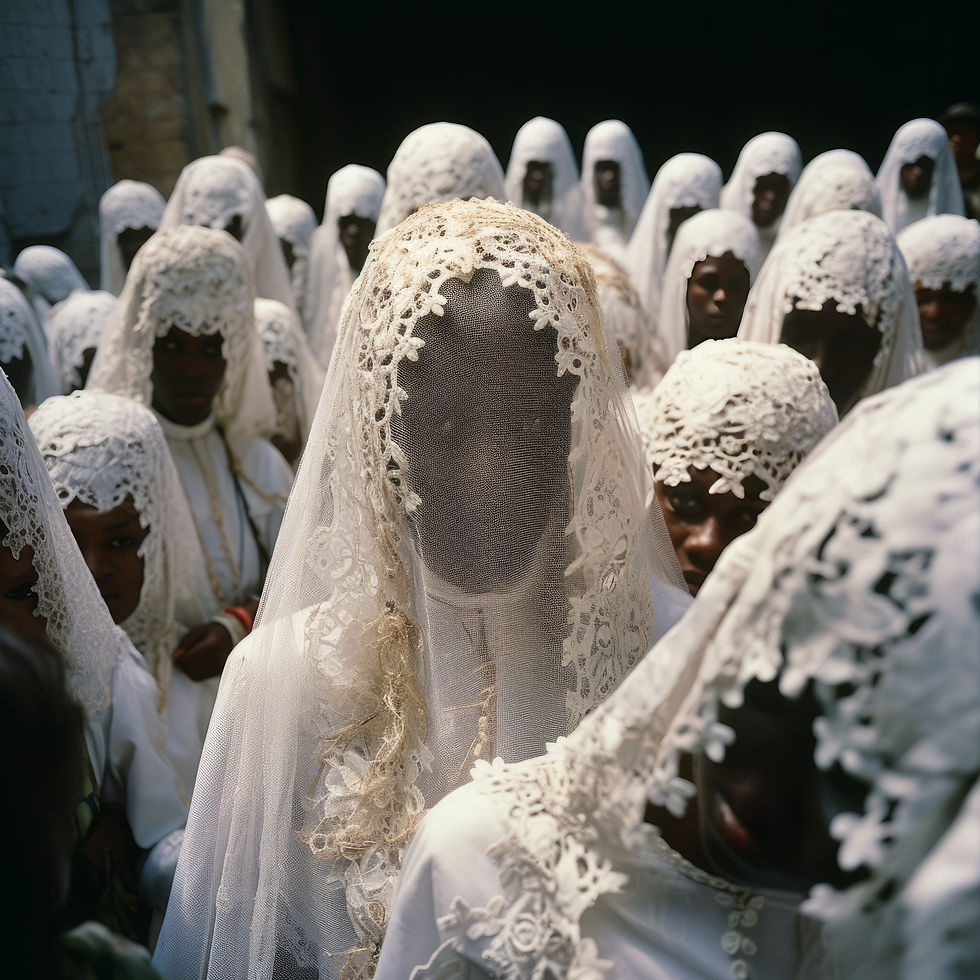
Marriages can be arranged by family agreements, and if the woman is a virgin, dowry can be paid. Some marriages can originate from enticing an immature young damsel. Such marriages do not have any future chance for divorce. If a man lays up unwarranted charges against a female taken in marriage and he is wrong, he can never divorce her ever (Devaureim 22:18). If a man slightly forces himself on a woman and lay with her, he can never divorce this damsel, they must remain married forever (Devaureim 22:28~29). In all these cases of marriages and a female becoming a wife (isha), there is no such document mentioned or found throughout the entire T'Nakh. Even the marriages of king Dauweid to Abigayil, Akhinoam, Bathshevah and others, did not need such document as a Ketubah, neither was this ever mentioned.
The ways of the Jewish people and the chosen people, the Yisraelites, are not similar, Jewish people follow books written by people personifying Kohen, while the Yisraelites solely follow the Scriptures, which were passed down from Mosheh. If everyone is living right and righteously, there would be no use for a ketubah nor a bill of divorce. Today, marriages are so fickle because the Yafite ways have tainted the words of YAH and the way of life of Avrauham and Sarah whom YAH told us to follow (Yeshaiyahu 51:1~3). Sar Elisha


Comments